| [Index] |
| John BROOKER (1809 - 1886) |
| Children | Self + Spouses | Parents | Grandparents | Greatgrandparents |
|
Mary BROOKER (1848 - 1931) Jonathan BROOKER (1849 - 1906) William BROOKER (1851 - 1935) Murdo BROOKER (1853 - 1913) |
John BROOKER (1809 - 1886) + Janet MCKENZIE (1809 - 1901) |
Jonathan BROOKER (1760 - 1833) | ||
| Mary Anne WADE (1777 - 1859) | ||||
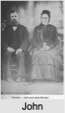
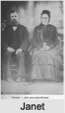
|
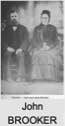
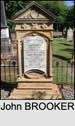
|
| b. 24 Jun 1809 at Windsor, New South Wales, Australia |
| m. 1843 Janet MCKENZIE (1809 - 1901) |
| d. 07 Dec 1886 at Kangaloon, New South Wales, Australia aged 77 |
| Near Relatives of John BROOKER (1809 - 1886) | ||||||
| Relationship | Person | Born | Birth Place | Died | Death Place | Age |
| Father | Jonathan BROOKER | 1760 | Kent, UK | 14 Mar 1833 | Airds, New South Wales, Australia | 73 |
| Mother | Mary Anne WADE | 1777 | London, Middlesex, England | 17 Dec 1859 | Fairy Meadow, New South Wales, Australia | 82 |
| Self | John BROOKER | 24 Jun 1809 | Windsor, New South Wales, Australia | 07 Dec 1886 | Kangaloon, New South Wales, Australia | 77 |
| Wife | Janet MCKENZIE | abt 1809 | 04 May 1901 | Robertson, New South Wales, Australia | 92 | |
| Daughter | Mary BROOKER | 18 Dec 1848 | 20 Jul 1931 | Kangaloon, New South Wales, Australia | 82 | |
| Son | Jonathan BROOKER | 03 Dec 1849 | Wollongong, New South Wales, Australia | 17 Jun 1906 | Kangaloon, New South Wales, Australia | 56 |
| Son | William BROOKER | 24 May 1851 | Charcoal Creek, New South Wales, Australia | 05 Apr 1935 | Kangaloon, New South Wales, Australia | 83 |
| Son | Murdo BROOKER | 13 May 1853 | Charcoal Creek, New South Wales, Australia | 29 Jun 1913 | Robertson, New South Wales, Australia | 60 |
| Sister | Sarah WADE | 27 Sep 1793 | Norfolk Island | 05 Jul 1887 | 93 | |
| Brother | William James WADE BROOKER | 10 Dec 1796 | Norfolk Island | 09 Oct 1885 | Lake Albert, New South Wales, Australia | 88 |
| Sister | Elizabeth BROOKER | 07 Dec 1810 | Hawkesbury District, New South Wales, Australia | |||
| Sister | Mary BROOKER | 28 Nov 1812 | Hawkesbury District, New South Wales, Australia | 29 Sep 1890 | Lake Albert, New South Wales, Australia | 77 |
| Brother | James BROOKER | 30 May 1814 | Airds, New South Wales, Australia | 15 Mar 1880 | Fairy Meadow, New South Wales, Australia | 65 |
| Half Brother | Edward BROOKER HARRIGAN | 20 Aug 1803 | Sydney, New South Wales, Australia | 09 Jul 1891 | Fairy Meadow, New South Wales, Australia | 87 |
| Daughter in Law | Henrietta BRENNING | abt 19 Aug 1858 | Wollongong, New South Wales, Australia | 03 Jun 1953 | Kangaloon, New South Wales, Australia | 94 |
| Daughter in Law | Margaret YOUMAN | abt 1860 | Wollongong, New South Wales, Australia | 12 Apr 1946 | Ashfield, New South Wales, Australia | 86 |
| Daughter in Law | Eliza Jane DIGGINS | abt 1851 | 05 May 1940 | Moss Vale, New South Wales, Australia | 89 | |
| Grandson | Jonathan William BROOKER | abt 1887 | Robertson, New South Wales, Australia | 20 Oct 1957 | Lismore, New South Wales, Australia | 70 |
| Grandson | George William BROOKER | |||||
| Granddaughter | Elsie Margaret BROOKER | 16 Mar 1883 | Kangaloon, New South Wales, Australia | 15 Dec 1969 | Sydney, New South Wales, Australia | 86 |
| Granddaughter | Janet Isobel BROOKER | 1886 | Robertson, New South Wales, Australia | 1977 | Raymond Terrace, New South Wales, Australia | 91 |
| Grandson | Joseph James BROOKER | 1888 | Robertson, New South Wales, Australia | |||
| Granddaughter | Mary Helen BROOKER | 20 Jun 1888 | Robertson, New South Wales, Australia | 08 Feb 1892 | Robertson, New South Wales, Australia | 3 |
| Niece | Mary RAY | 16 Sep 1809 | 1837 | 28 | ||
| Niece | Sophia RAY | 28 May 1812 | Campbelltown, New South Wales, Australia | 1877 | Wagga Wagga, New South Wales, Australia | 65 |
| Nephew | William RAY | 07 Dec 1814 | 30 May 1885 | Marrickville, Sydney, Australia | 70 | |
| Nephew | John RAY | 12 Oct 1817 | Campbelltown, New South Wales, Australia | 10 Sep 1859 | 41 | |
| Niece | Maria RAY | 16 May 1822 | 22 Apr 1924 | Sydney, New South Wales, Australia | 101 | |
| Nephew | Nathaniel BOON | 14 Sep 1825 | 11 Feb 1911 | Gundagai, New South Wales, Australia | 85 | |
| Niece | Margaret BOON | 17 Sep 1826 | 09 Jul 1904 | 77 | ||
| Nephew | Thomas BOON | 12 Aug 1828 | ||||
| Nephew | James BOON | 20 Nov 1830 | ||||
| Nephew | Jonathan BOON | 20 Nov 1830 | 15 May 1901 | 70 | ||
| Nephew | Nicholas BOON | 20 Nov 1830 | 18 Nov 1899 | 68 | ||
| Niece | Sarah Ann BOON | 02 Jun 1832 | 12 Oct 1854 | 22 | ||
| Nephew | Daniel BOON | 25 Nov 1852 | 19 Jul 1876 | 23 | ||
| Niece | Mary Ann BROOKER | 24 Mar 1821 | Campbelltown, New South Wales, Australia | 09 Jan 1863 | Wagga Wagga, New South Wales, Australia | 41 |
| Niece | Sarah Elizabeth BROOKER | 20 Mar 1823 | Campbelltown, New South Wales, Australia | 23 Nov 1890 | Wagga Wagga, New South Wales, Australia | 67 |
| Nephew | William BROOKER | 26 Dec 1824 | 09 Jun 1892 | 67 | ||
| Nephew | Jonathan BROOKER | 16 Jun 1827 | Campbelltown, New South Wales, Australia | 14 Feb 1829 | Campbelltown, New South Wales, Australia | 1 |
| Niece | Elizabeth BROOKER | 11 Mar 1830 | 08 May 1905 | 75 | ||
| Nephew | Jonathon BROOKER | 19 Jul 1832 | New South Wales, Australia | 03 Jun 1888 | Wagga Wagga, New South Wales, Australia | 55 |
| Nephew | James BROOKER | 16 Oct 1834 | Campbelltown, New South Wales, Australia | 17 Sep 1907 | Wagga Wagga, New South Wales, Australia | 72 |
| Niece | Sophia Jane BROOKER | 19 Jul 1838 | Campbelltown, New South Wales, Australia | 1916 | Redfern, New South Wales, Australia | 78 |
| Nephew | Joseph Henry BROOKER | 27 Feb 1840 | Campbelltown, New South Wales, Australia | 21 Dec 1840 | Campbelltown, New South Wales, Australia | 0 |
| Niece | Eliza BROOKER | 21 Feb 1843 | 20 May 1877 | 34 | ||
| Niece | Sophia LOWE | 14 Apr 1828 | Campbelltown, New South Wales, Australia | 29 Mar 1893 | Wollongong, New South Wales, Australia | 64 |
| Nephew | John Christopher LEDWIDGE | 26 Jul 1832 | Fairy Meadow, New South Wales, Australia | 01 Jul 1873 | Hay, New South Wales, Australia | 40 |
| Nephew | Christopher LEDWIDGE | 05 Feb 1834 | Fairy Meadow, New South Wales, Australia | 08 Aug 1869 | Balranald, New South Wales, Australia | 35 |
| Nephew | Henry ANGEL | 16 Nov 1836 | Fairy Meadow, New South Wales, Australia | 09 Jul 1924 | Wagga Wagga, New South Wales, Australia | 87 |
| Nephew | William ANGEL | 17 Oct 1838 | Fairy Meadow, New South Wales, Australia | 28 Oct 1891 | Newtown, New South Wales, Australia | 53 |
| Niece | Keturah ANGEL | 05 Oct 1841 | Fairy Meadow, New South Wales, Australia | 22 Nov 1932 | Wagga Wagga, New South Wales, Australia | 91 |
| Nephew | Robert ANGEL | 05 Oct 1841 | Fairy Meadow, New South Wales, Australia | 19 May 1870 | Wagga Wagga, New South Wales, Australia | 28 |
| Nephew | Richard ANGEL | 19 Feb 1844 | Fairy Meadow, New South Wales, Australia | 16 Jun 1907 | Wagga Wagga, New South Wales, Australia | 63 |
| Niece | Mary ANGEL | 10 Feb 1847 | Hay, New South Wales, Australia | 07 Jul 1932 | Kogarah, New South Wales, Australia | 85 |
| Niece | Sarah M ANGEL | 10 Feb 1847 | Hay, New South Wales, Australia | |||
| Nephew | James ANGEL | 08 Mar 1850 | Hay, New South Wales, Australia | 05 Jun 1926 | Wagga Wagga, New South Wales, Australia | 76 |
| Nephew | Edward Jonathon ANGEL | 13 Jun 1852 | Hay, New South Wales, Australia | 08 Nov 1934 | Lake Albert, New South Wales, Australia | 82 |
| Nephew | Samuel ANGEL | 18 Feb 1853 | Campbelltown, New South Wales, Australia | 21 Apr 1938 | Wagga Wagga, New South Wales, Australia | 85 |
| Niece | Louisa Willison BROOKER | 1853 | 1854 | 1 | ||
| Niece | Rosina BROOKER | 1855 | Tarrawanna, New South Wales, Australia | 20 Jan 1944 | Corrimal, New South Wales, Australia | 89 |
| Nephew | James Albert BROOKER | 22 May 1858 | 27 Oct 1939 | 81 | ||
| Niece | Mary Louisa BROOKER | 15 Mar 1860 | 02 Nov 1937 | 77 | ||
| Nephew | William Willison BROOKER | 03 Nov 1862 | Fairy Meadow, New South Wales, Australia | 19 Mar 1863 | Fairy Meadow, New South Wales, Australia | 0 |
| Niece | Mary Anne HARRIGAN | 1835 | 07 Aug 1870 | 35 | ||
| Niece | Elizabeth HARRIGAN | 10 Jun 1837 | 20 Dec 1915 | 78 | ||
| Nephew | James Edward HARRIGAN | 28 May 1839 | 12 May 1929 | 89 | ||
| Niece | Sarah Jane HARRIGAN | 1855 | 28 Oct 1893 | 38 | ||
| Nephew | William HARRIGAN | 22 Dec 1857 | 04 Sep 1948 | 90 | ||
| Niece | Louisa Emily HARRIGAN | 22 Mar 1860 | 17 Jan 1889 | 28 | ||
| Niece | Alice Clara HARRIGAN | 05 Aug 1863 | 17 Jan 1956 | 92 | ||
| Brother in Law | William RAY | abt 1759 | 17 Oct 1835 | 76 | ||
| Brother in Law | Nathaniel BOON | 1792 | 18 Feb 1839 | 47 | ||
| Sister in Law | Sophia MITTON | 24 May 1801 | Parramatta, New South Wales, Australia | 17 Jan 1892 | Lake Albert, New South Wales, Australia | 90 |
| Brother in Law | Daniel LOWE | 07 Oct 1810 | ||||
| Brother in Law | John HART | 1830 | Windsor, New South Wales, Australia | |||
| Brother in Law | Christopher LEDWIDGE | 1799 | 05 Feb 1834 | Wollongong, New South Wales, Australia | 35 | |
| Brother in Law | Henry ANGEL | abt 08 Jan 1791 | Woodgreen, Hampshire, England | 07 Dec 1881 | Lake Albert, New South Wales, Australia | 90 |
| Sister in Law | Elizabeth Willison WOOD | abt 1821 | Cork, Co Cork, Ireland | 03 Jan 1916 | Gosford, New South Wales, Australia | 95 |
| Sister in Law | Mary WEBBER | abt 1797 | Guernsey, Channel Islands, UK | 07 Feb 1854 | Dapto, New South Wales, Australia | 57 |
| Sister in Law | Jane Willison WOOD | 1820 | Cork, Co Cork, Ireland | 1916 | Tarrawanna, New South Wales, Australia | 96 |
| Events in John BROOKER (1809 - 1886)'s life | |||||
| Date | Age | Event | Place | Notes | Src |
| 24 Jun 1809 | John BROOKER was born | Windsor, New South Wales, Australia | 83 | ||
| 14 Mar 1833 | 23 | Death of father Jonathan BROOKER (aged 73) | Airds, New South Wales, Australia | ||
| 1843 | 34 | Married Janet MCKENZIE (aged 34) | |||
| 18 Dec 1848 | 39 | Birth of daughter Mary BROOKER | |||
| 03 Dec 1849 | 40 | Birth of son Jonathan BROOKER | Wollongong, New South Wales, Australia | 76 | |
| 24 May 1851 | 41 | Birth of son William BROOKER | Charcoal Creek, New South Wales, Australia | 76 | |
| 13 May 1853 | 43 | Birth of son Murdo BROOKER | Charcoal Creek, New South Wales, Australia | 76 | |
| 17 Dec 1859 | 50 | Death of mother Mary Anne WADE (aged 82) | Fairy Meadow, New South Wales, Australia | ||
| 07 Dec 1886 | 77 | John BROOKER died | Kangaloon, New South Wales, Australia | 83 | |
| Source References: |
| 76. Type: Web Page, Abbr: Find a Grave, Title: Find A Grave, Locn: https://www.findagrave.com/ |
| - Reference = https://www.findagrave.com/memorial/173330083/john-brooker (Name, Notes) |
| 83. Type: Interview, Abbr: Chris Morrow, Date: Various 2023+ |
| - Reference = Dec 2022 (Birth) |
| - Reference = Dec 2022 (Name, Notes) |
| - Reference = Dec 2022 (Death) |
| 85. Type: Book, Abbr: Mary Wade to Us, Title: Mary Wade to Us, Auth: Mary Wade Family History Association, Publ: Mary Wade Family History Association, Date: 1986, Locn: https://www.marywadefamily.org/items/show/1 |
| - Reference = page 147++ (Name, Notes) |
| - Notes: John Brooker, son of Mary Wade and Jonathan Brooker, was born at Windsor 24th June, 1809, and was taken as a child of four or five to live at Airds (Campbelltown). The 1814 Muster shows him as one of four children with Jonathan and Mary in the Liverpool District (which included Airds), all off stores. Jonathan's grant had been surveyed In , 809. I know little of the childhood of John, but he certainly shared the hardships of the early settlers. The family were still at Airds in 1825. The 1828 Census shows them as residents of IIlawarra, where Jonathan is listed as a carpenter, 68 years of age, with 50 acres cleared and 12 cultivated. To have achieved this he must have arrived earlier than 1828. John was living with the family, aged 19 years, although the Census says 22 years.
John held a Crown Grant, Portion 86, in the Corrimal District, but I can find no record when that land returned to the Crown. However, the same portion 86 was "originally granted" to Patrick Plunkett by Crown Grant 29-5-1838 (Ac. Registrar General, see Volume 1577, Folio 152L and the papers say granted earlier to John Brooker. There are many gaps in our knowledge of John's life between 1828 and 1848 when he married Janet MacKenzie at Berkley near Wollongong. Janet had arrived from Scotland to join her brother, Dr. Kenneth MacKenzie, an early settler on the Shoalhaven. John and Janet lived at Charcoal Creek (called Unanderra since 7-4-1881), where their four children were born. In the new colony centred on Sydney all land belonged to the Crown. At first Crown Grants were made to some people. This system prevailed from 1788 till about 1831, after which land could be purchased at varying prices. In 1842 the Crown lands Sale Act was passed, stipulating that all land must be sold at auction for not less than £1 an acre, and Squatter's Licences were issued for large tracts of land at £10 a time, to squatters who had previously paid nothing. John Robertson, a large landowner and business man, was Minister in charge of land at this time, and he advocated a change in land system to encourage a more productive use of the land anywhere. In 1861 two Acts were passed aimed at this reform, and from 1-1-862 any person could Conditionally Purchase from 40 to 320 acres of unreserved Crown Land at £1 an acre. One quarter of the purchase price was required al the time of purchase, and the rest within three years or 5% interest would be charged on the balance. Two more conditions were laid down. The purchaser must occupy the land, and no freehold would be granted until the land was improved to the extent of £1 an acre. The Kangaloon area was opened up by this method of Conditional Purchase, and any man could make a free selection of Crown Land before survey. John's brother James Brooker of Wollongong purchased 23 acres at Charcoal Creek in 1852, and the adjoining 23 acres was held by Jonathan Brooker of Charcoal Creek from 1-6-1854. It was from Charcoal Creek that John went to Kangaloon, where he finally settled. Whether John and Jonathan of Charcoal Creek are the same person matters not. We do know, however, that the first three portions surveyed on 1-4-1862 in the Yarrawa Brush, on the northern side of the Wingecarribee Swamp went to John Brooker, his brother-in-law Dr. Kenneth MacKenzie and William Newcombe, at a place now called Kangaloon. The Yarrawa Brush was very dense rain forest covering a large tract of higher country, just west of the range, and to the north and south of Wingecarribee Swamp. This Brush for many years effectively separated the coastal region of Illawarra from the land opening up a few miles further west which was served by the Old South road to Sydney. John and his family walked up over the mountain, via the Bong Bong track as far as Mount Murray, and then across 10 Kangaloon. They carried what they could. They were not going to better conditions at once, these came much later. The walk took three days. Although the Yarrawa Brush was almost impenetrable rain forest, the red basalt soil with springs, running creeks and rivulets made it an attractive proposition to land hungry men from the Illawarra. By 1865 30,000 acres had been taken up. Men with money considered the cost of clearing the land, at an estimated cost of £25 an acre, far outweighed its potential value, and so it went to settlers prepared to do the work themselves. John's original Portion 29 was bounded by the Folly Creek to the North, and stretched southwards to just beyond the present Kangaloon Road. The first shelter for the family was erected beside a spring not far from the creek, and a little to the west of the present lane. The first small area round the house became a vegelable garden, as it was necessary to produce as much food as possible, as soon as possible. Later a better house was built a little further west of the first shelter, and peaches and gooseberries flourished in that garden till the 1930's, when the house was demolished. Clearing the land was a formidable task. Axes and hoes were the available tools, and the brush contained hardwood trees (messmates, bloodwoods and turpentine) and softwoods (sasafras, leather jacket, sally wattles and a little red cedar). These trees were intertwined with various vines, bushes and lower growing trees. Early surveyors describing this brush called it Impenetrable. When John's land at Kangaloon was surveyed his boys were roughly 11, 9 and 7 years of age and, although he was over 50 himself, most of the early clearing fell to him. The smaller trees and vines were cut down, dried and later burnt. The ashes were hoed into the soil and maize and potatoes thrived in small areas. The women and children helped where they could. There were no roads, so any surplus produce could only reach the coast if taken on a man's back, or later by packhorse, where it could be exchanged for flour, etc. The first years at Kangaloon were hard years for the settlers, and droughts did not help. The years 1867-1869 almost killed the settlement. Some settlers went under, but some, including the Brookers of Forest Lodge, survived. It was only in the eighteen seventies, with the coming of team saw mills, that real progress was evident. The big trees, after felling, could be hauled by bullocks to the mill. The less valuable sawn timber was kept by the settlers to improve their dwellings, and the better timber was sold, much of it on the Sydney market. This was the first reliable cash crop for Kangaloon, while the limber lasted. Lack of roads to get produce out to a market persisted through the early years. A road connecting Kangaloon with the Old South Road was surveyed in 1865 and extended to Robertson in 1867. In 1869 Macquarie Pass Track was improved, but the Pass Road as we know it was not opened till 1898. Slowly the land was being cleared and pasture established. Cattle and horses followed. To keep stock, fences were needed. In Kangaloon some were cockatoo fences, made of logs, and some were stone walls. At first the womenfolk were responsible for the dairy work. They assisted with milking, heated the milk and set it out in large shallow trays till the cream rose. The cream was collected and made into butter in old fashioned wooden hand churns. At this time the dairy was an important adjunct to the house. The old Forest Lodge stone dairy still stands, carrying the date 1888, but the adjacent house is gone. The home-made butter was well salted and packed in wooden kegs for packhorse transport to the coast. If only one keg of butter was being carried, a second keg of stones balanced the load. In many cases among the stones in the second keg would be "mountain dew", and this home made whisky found a ready market and provided a source of cash. The dairy industry in Kangaloon, from its humble beginnings has flourished, and today milk is supplied to the Sydney market. The products of dairying are perishable, and only with improved roads, faster transport and refrigeration did Kangaloon realise its potential. The hand churning of butter in individual homes was replaced by co-operative dairy factories in the nineties, employing butter makers. At first all milk was taken to the factory for separation of the cream, but later separators were installed on individual farms. Refrigeration of milk, cream and butter increased the life of the products, enabling transport to larger depots. The small dairy factories closed. At first transport was horse drawn and slow. In 1913 the Board of the Kangaloon Co-operative Transport Society purchased their first motor lorry, and faster transport to Bowral depot ensued. This method of transport lasted till 1963, when a new system was introduced. Bulk milk pick-up from individual farms by refrigerated tanker began, and is still operating. Photos of different parts of Kangaloon, taken at the turn of the century, show that the early settlers had cleared most of the "impenetrable brush", and so in less than forty years a very beautiful, and very productive area had emerged. Some of the original Grants by conditional purchase are still held by descendants of the original purchasers, such as Brookers. Additional adjacent farms have been added to the Brooker property by purchase, As well as clearing the land and bringing it into production, the early settlers concerned themselves with religion and education in their community. The first churches were built and schools were opened at both East and West Kangaloon in the 1860's. That these things happened during the first decade when settlers were struggling to survive, speaks highly and loudly of their quality, and here I would like to pay special tribute to the women who faced hardship beside their men, bore their children, lived to great ages and achieved a serenity we seldom meet today. The women to whom I particularly refer are John's wife, Janet, and her three daughters-in-law, Henrietta, Margaret and Eliza. Quite early we find the settlers of Robertson, Burrawang, Wildes Meadow and Kangaloon forming a Progress Association which later grew into the Robertson Agriculture and Horticultural Society, representing the farmers of the area. This Society celebrated its Centenary in 1978. The name Brooker is liberally sprinkled through its records, both as committee men and exhibitors. The Centenary President, F. C. Morrow, and the Vice-President and chief cattle steward, Eric Brooker, are both great grandsons of John Brooker, who look up Forest lodge in 1862. F. C. Morrow is a grandson of Murdo of Yarrawa, and Eric Brooker is a grandson of William of Forest Lodge. Before John's death in 1886 he had secured land for each of his sons. Jonathan got portion 175, known as Thistle Brae Farm, Box Vale. John applied for this portion 20-9-1869 and the survey was completed 21-5-1870. William got portion 47 across the creek from Forest lodge. This was purchased at a land auction at Berrima in 1864 by Peter Schuhmann, and later sold to John Brooker. Similarly, portions 45 and 36 of Albert and Alfred S. Sawtell respectively were added to the Brooker property by purchase. When the Youman family left East Kangaloon in the early eighties their farm was purchased and went to Murdo. In December 1880 Jonathan married Henrietta Brenning, at SI. Mark's C. of E., West Kangaloon. The bride, daughter of an early settler, had walked with her family from Dapto to Kangaloon, al the age of four, carrying her pet bantam. Jonathan and Henrietta went to live at Box Vale and raised a large family of eight boys and six girls. Tragedy struck early. The first child was burnt to death aged 3½ years. Jonathan became well known as a breeder and judge of cattle. On his own property he favoured Ayrshires, and was a successful exhibitor of these. He was a healthy, hard working man, and his death from blood poisoning at 56 years shocked the district. At this time only his eldest daughter, May, had married and left home, and this left his widow, Henrietta, with the formidable task of running the property and supporting twelve children. Her eldest son. Leslie, was 20 years old, and the youngest child was 6. The very severe drought al the turn of the century had forced many early settlers with growing families to move elsewhere. Many had gone to the Richmond River. The eldest son, Leslie, remained at Box Vale. The eldest daughter, May, had married a Kangaloon Lindsay, already at Mullumbimby. Later May's brother George Robert (Bob) visited her, and his report on the area encouraged some of the Box Vale Brookers to go there. Half the cattle at Thistle Brae were given to Robert, Stanley, Stafford and Charles to start them in the new area. They drove the cattle from Box Vale to a rented farm at Myocum, Mullumbimby. Two at their sisters, Annie and Millie, went to housekeep for their brothers. The girls travelled by boat to Byron Bay. Annie later married Arthur Tindall and lived to see her family establish a well-known Hereford Stud at Cawongla, near Kyogle. She died shortly before her 100th birthday. Robert, Stafford, Stanley and Charles enlisted in World War l. Charles was rejected on account of eyesight. He returned to Box Vale for the duration, but later went back to the rivers. married, established his own farm, and raised a family of two boys and two girls. Both boys met tragic ends by accidents. One drowned and the other was electrocuted on their own property. After the war Stafford and Stanley established themselves on the Richmond River at Wyralla. Robert went to the Dorrigo and established himself, like his father, as a cattle breeder. Of the girls, May and Annie remained on the Richmond River. Jean and Ella married teachers and lived in Sydney. In 1916 Leslie took over the farm, and his mother went to Sydney to live with her unmarried daughters. Later Millie and Linda married and remained living in Sydney. Mrs Brooker lived to a great age, the later part of which was spent in the home of her daughter, Ella Middleton. She died, aged 95, in 1953 and is buried at East Kangaloon. William was the second son of John and Janet. Janet was a Highland Scot, and followed Scottish tradition whenever possible, as in the naming of her children. The first girl was named Mary, after her father's mother. There was no second girl to be called Anne for her mother's mother. The eldest son was called Jonathan, for his father's father. The second son should have been Murdo, for his mother's father, but he was a very frail baby, not expected to live. He was called William, rather than waste the name Murdo, which eventually went to the third son. Incidentally, William survived for 83 years. William married Margaret Youman, 12-4-1882, eldest daughter of Joseph Youman, an early settler in East Kangaloon. The marriage was in the Presbyterian Church, Dapto, where Margaret's parents had married a generation earlier. William and Margaret began marred life on portion 47, across the Folly Creek from Forest Lodge. After the death of John in 1886, William took over Forest Lodge as well. Whether the big old house was built before John died I am not sure, but the stone dairy adjoining the house and orchard still stands, and carries the date 1888. The old house survived into the 30s, and deserves some comment. It was not near the creek, but on the top of a hill, and was the third house, I think, and overlooked the Kangaloon Road. This position was only possible because tanks had arrived in the district, and the collection of roof run-off water ensured water supply. The house was of timber, and built to the usual plan at that time. The big kitchen and a very large dining room formed one sectIon, separated by a covered breezeway from the front area of bedrooms and a little used sitting room. The outer walls of the kitchen area were of vertical slabs, while the outer walls of the front area were of sawn timber. Verandahs ran on two sides of the kitchen, and across the front of the house. A picket fence secured the house garden from the inroads of stock. Ivy, violets, lavender, roses and bulbs flourished in this garden. A box tree grew on either side of the front gate, and though the house is gone, the box trees are still alive in the paddock. An adjoining orchard contained apples, pears, plums, gooseberries, etc. The dairy was a separate building, at the back of the kitchen; milk was dealt with and butter made. The kitchen was the hub of the house. Almost the whole of one end wall was taken up by the fireplace, furnished with fire-dogs and cross bars, while an upright iron bar supported a swinging horizontal arm to which hooks were attached to carry camp ovens and pots, etc. Wood for the fire was cut in varying lengths and thicknesses. The fire itself was raised about eight inches above floor level. A huge hearthstone was in front of the fireplace. With these primitive aids, and no refrigeration or electricity, women coped successfully, producing good meals with minimum fuss. Sides of bacon usually hung from the roof, and in wet weather men's heavy outdoor clothing would be strung up before the fire to dry. The writer of this section was born in this old house. Five children were born to William and Margaret between 1883 and 1686, the last two, Joseph James and Mary Helen were twins. Mary Helen was burnt to death when three years and eight months old. The four children, Elsie, George, Janet (Sis) and Joseph James (Jim) went at different times to both East and West Kangaloon schools in the 1890’s. They lived half-way between the two schools. By the turn of the century Kangaloon was beginning to prosper , and the days of real hardship were over. In 1905 Elsie married Stanley Morrow, a teacher, and left Kangaloon. Janet married Joseph Noble in 1907. They farmed far some years at Springside, Kangaloon, but later moved to the Hunter at Raymond Terrace. Both Elsie and Janet (Sis) were married in the house at Forest Lodge. George and Jim remained at Forest lodge while young men. George married Vera Fuller in 1912 and farmed at East Kangaloon for same years. William Brooker retired from active farming in 1917 and went to live in "Brooklyn", another cottage on the property. George and family moved into Forest Lodge, and George and Jim ran the property as a single unit. Jim remained at Forest Lodge till his marriage to Clarice Marr, at Bulli in 1925, after which he lived in Robertson, where he established a carrying business. William Brooker died in 1935, leaving his farms to his sons George and Jim. George ran the property as a single unit, with the help of his sons Er!c and Keith until his sudden death In 1955. Eric and Keith continued the single unit pattern till Jim's death in 1968, after which time it was separated to two units, one going to George's sons, and the other to Jim's daughter, Heather Paterson. Neither Eric nor Keith had sons, so with this generation the name Brooker is lost to Forest lodge. After William's death hIs widow, Margaret , remained at " Brooklyn" for some time. Her later years were spent with her daughters Elsie and Janet. She died in 1946 at the home of Elsie Morrow in Haberfield, and is buried at East Kangaloon. Murdo was the last son of John and Janet. He married Eliza Diggins, daughter of an early settler and went to live on portion 58 of 100 acres at East Kangaloon, purchased from the Youman family when they moved to the New England district in the early eighties. They had eight children, including two sets of twins, between 1885 and 1894. Two children were lost while in Kangaloon. Frederick Donald, twin brother of Herbert, died when nine weeks old, and John lames was killed by lightning in 1905, aged fifteen years. Soon after this and shortly before the marriage of the eldest chIld, Sarah, the family moved to Yarrawa, near Robertson, to a property purchased from Millers, original settlers on the southern side of Wingecarribee Swamp. The East Kangaloon property was not sold. Sarah married Francis Westley Morrow and remained in the district, farming first on Portion 58, and later on the Diggins property now occupied by their son, Francis Cecil Morrow. The other daughter, Janet, married an American, Arthur Stine. They remained in N.S.W. for some time, but eventually went to America where their descendants now reside. Both Sarah and Janet were married in the house at Yarrawa. Murdo and his sons established a reputation as vegetable growers as well as being cattle men. Murdo died suddenly in 1913. His widow remained at Yarrawa till her death in 1940. Herbert did not marry, and remained at Yarrawa after the death of his mother. He died in 1963. Murdo's son, Archie, married Doris Saunders and farmed in the district, then at Picton, later Exeter and finally on the Reservoir Farm at Dapto. He died in 1946. Archie's twin brother, Albert (Bertie), bought Portion 58 in 1919 and farmed there for many years. His first wife was Merlina Marshall. They had three daughters, the first two being twins, and at a later date one of these twins presented her father, (himself a twin) with twin granddaughters. His second wife was Alice Barton (nee Chadwick), and they had one daughter. Murdo's youngest son, WaIter, married Elsie Bisby and farmed in the Robertson area for some years. When one of his sons had learnt the trade of soft drink manufacture, Waiter and family moved to Yass and established a soft drink factory, which is run today by two of his sons. Having briefly surveyed the descendants of Mary Wade through her son John to the third generation Australian born, I would like to devote a little space to the fourth, fifth, Sixth and seventh generations shown in the family trees. The family is still represented on the land in Kangaloon and various other parts of eastern Australia, but today it is also well represented in the professions and in commerce. In the world of sport we can claim an Australian representative in the Disabled Olympics, and interstate representatives in various sports, and at club and grade level we have considerable representation in a great number of sports. Today John's living descendants number over three hundred, and include one of his grand-daughters, Mrs. Linda Lascelles, now in her late eighties. This means that counting the founding parents and the three generations of Australian born descendants, this family covers European settlement in Australia from 1790 to 1985, in four generations. I think Mary and Jonathan might well be proud of them. |